Mushroom Library Cards Vol.9: A Vintage Toolkit for Modern Projects
Finding design assets that carry genuine personality can feel like searching for a needle in a haystack. We often settle for generic templates that lack a narrative. However, when you stumble upon a collection like Mushroom Library Cards Vol.9, you are not just downloading files; you are acquiring a piece of visual history reimagined for modern creativity. This collection stands out because it marries the nostalgic appeal of the analog world with the whimsical, earthy aesthetic of mycology. It is a specific tool for a specific vibe, and when used correctly, it elevates a project from standard to memorable.
Visual Character and Style
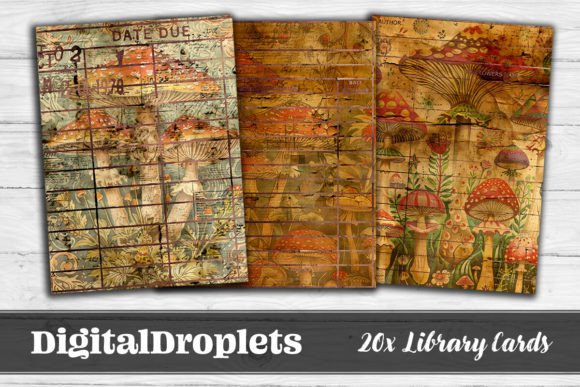
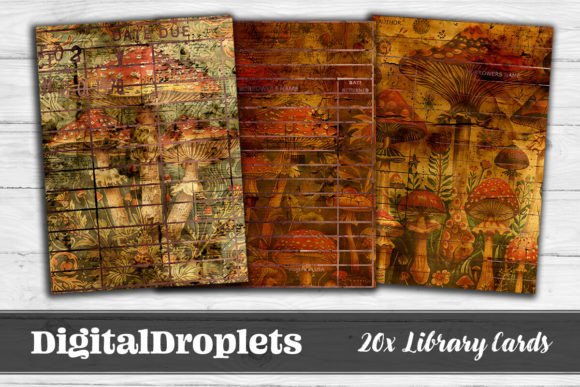
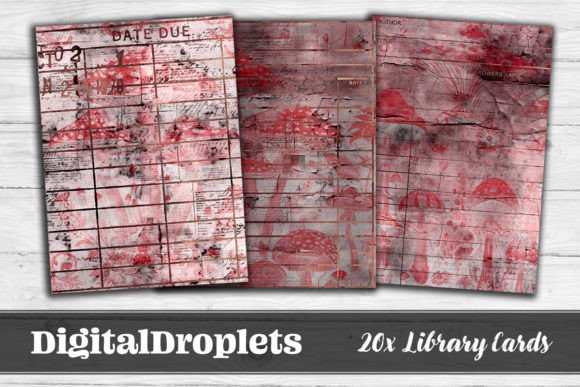
At its core, Mushroom Library Cards Vol.9 is a set of 20 high-resolution PNG files. But describing it merely by its technical specs does it a disservice. Visually, these assets bridge the gap between the structured, bureaucratic nature of a library checkout card and the organic, free-flowing shape of mushrooms. The design utilizes overlays to blend these two worlds. You get the texture of aged paper, the faint lines of the ledger, and the intricate details of fungal illustrations sitting on top.
The personality of this set is undeniably vintage and grounded. It avoids the sleekness of modern flat design in favor of something more tactile. The style feels "found" rather than created, which is a powerful psychological tool in design. When a viewer looks at a scrapbook page or a digital invitation featuring these cards, they feel a sense of history. The 300dpi resolution ensures that whether you are printing these for a physical album or displaying them on a high-retina screen, the details remain crisp. There is no pixelation to break the illusion of the vintage aesthetic.
Practical Applications for Creators and Businesses
The versatility of Mushroom Library Cards Vol.9 is one of its strongest selling points. While the prompt mentions scrapbooks and photo albums, the potential applications stretch much further, especially for digital marketers and content creators.
For those involved in editorial design, these library cards make excellent pull quotes or sidebar graphics. If you are designing a magazine layout or a blog post about nature, history, or slow living, dropping one of these cards behind a bold text header creates an immediate focal point. It adds depth to the page layout without requiring complex coding or layering.
In the realm of brand identity and packaging design, this set works beautifully for niche markets. Imagine a small-batch tea company, a local herbalist, or a vintage bookshop using these cards as hang-tags for products. The imagery reinforces the brand story of nature and knowledge. Because the files are PNGs with transparent or overlay capabilities, they can be easily integrated into mockups.
For social media graphics, standing out is difficult. These library cards offer a textural break from the flat colors of Instagram feeds. They can serve as backgrounds for quotes, announcements for book launches, or headers for "story time" segments. The visual hierarchy is naturally established because the library card format draws the eye to the center where the information would traditionally be stamped.
Integrating the Assets into Your Workflow
Using Mushroom Library Cards Vol.9 effectively requires a bit of strategy. Because these are graphic assets rather than a typeface, you need to consider how you will pair them with your typography. Since the cards have a distinct vintage and organic feel, they pair exceptionally well with serif fonts that have a bit of character or handwritten fonts that mimic cursive penmanship. A stiff, geometric sans serif font might clash with the organic mushroom overlays, unless you are intentionally going for a high-contrast modern vintage look.
When evaluating project fit, consider the emotional tone. If your project requires a feeling of sterility, minimalism, or hyper-futurism, this collection is likely not the right choice. However, if you are aiming for warmth, nostalgia, education, or nature, this is a perfect match.
Technical Considerations
From a production standpoint, the quality is high. The 300dpi specification is standard for print, meaning you can safely use Mushroom Library Cards Vol.9 in commercial print runs like flyers, stickers, or book covers without worrying about resolution loss. For digital use, the high resolution ensures that even if you crop into a specific section of a card to use as a texture, the image remains sharp.
It is also worth noting the value of having 20 variations. In a long-form project like a junk journal or a multi-page scrapbook, repetition can be visually boring. Having 20 distinct cards allows you to maintain the theme while varying the specific visual element on each page. This keeps the viewer engaged.
The Value of the Collection
The creator mentions having other variations in their shop, which highlights the importance of cohesion in design assets. If you are building a large project or a brand identity that relies heavily on this aesthetic, you can potentially expand your library with matching elements. However, Vol.9 stands strong on its own. It is a complete thought.
For designers and entrepreneurs, time is money. Creating these textures from scratch—scanning old papers, drawing mushrooms, compositing the layers, and ensuring print resolution—would take hours. Purchasing a set like Mushroom Library Cards Vol.9 is a practical business decision. It allows you to focus on the layout and the message rather than the asset creation.
Ultimately, this collection is about adding a human touch. In an era where much of our design work is vector-perfect and algorithmically aligned, introducing elements that feel organic and historical can make your work resonate on a deeper level. Whether you are a hobbyist documenting your garden or a publisher designing a cover for a fantasy novel, these cards provide a foundational layer of storytelling.